10 December 2022

OC BookBlog is now at Substack

I will be posting a few more reviews for 2022 here, but I've moved the OC BookBlog to Substack, and will eventually migrate all the years of reviews there, but for now, do subscribe there for book reviews. Free and easy. 

Sadly, OCinsite, where the OC BookBlog was born, is shutting down, so reviews will no longer be available there either. 

Follow the link below to keep up with reviews and recommendations for avid fiction readers and book groups.

Thanks. Happy reading. 

randykraft.substack.com

12 September 2022

Properties of Thirst will Quench a Smart Readers' Quest


Let me say first this novel is a masterpiece. Second only to her previous masterpiece, Evidence of Things Unseen. If you missed that one, make sure to read. Unforgettable and important, that's also how I would describe Properties of Thirst. Characters that leap into your consciousness and stay there as if old friends. Along the way, Wiggins weaves lessons of history, sets a powerful sense of place, and delivers a page-turning story. In the spirit of Stegner or an American Tolstoy. Historical, political, and also a love story. How often will those elements merge so beautifully?

...that what it meant to be American - what he'd thought it meant - was a portion of the whole, that whole was out there was a spectacle beyond his keyhole view, that once you are truly in it, even from an airplane, as far as you can see - everything is still too vast too large too big to be a unified idea - nothing out there but unmitigated Nature, testifying to its nothingness in the breadth and depth of its emptiness. 

The fictional story [grounded in historical detail] relates to the establishment of Manzanar, the internment camp set-up for Japanese residents in northern California after Pearl Harbor. Told through the lens of the government agent sent to spearhead the project, and the local ranching family with whom he becomes entwined, and who are struggling with water rights [yes, way back then, water politics went hand in hand with fascism.]

Schiff had estimated there would be "ten thousand" but the mind resists that number: the mind transforms that number to a cipher with no face. Yet here they were, busloads of them, silent and confused, transported only with the things they carried in their arms and pasteboard luggage: their memories. 

Along the way, there is love, and loss, of course. The land as a sustaining force. Also, the sustaining and bonding nature of food - fantastic descriptions of food, better than any TV chef, because the rancher's daughter is a self-taught gourmet chef. Add the passions of a sophisticated east-coast aunt with an unconventional lifestyle and the elders of the Japanese community, coalescing to counter ghetto living, and spice with fascinating economic and historical insights. 

As for the properties of thirst, they are elucidated at the start of each chapter, beginning with the element of surprise, to memory, desire, truth, and spontaneous combustion, among others. A most original defining structure and the properties of our lives. A must read for the erudite reader. And make sure to read the Afterword, by Wiggins' daughter, which describes the long remarkable journey to the completion of this book. Another achievement by the great Marianne Wiggins. 


23 May 2021

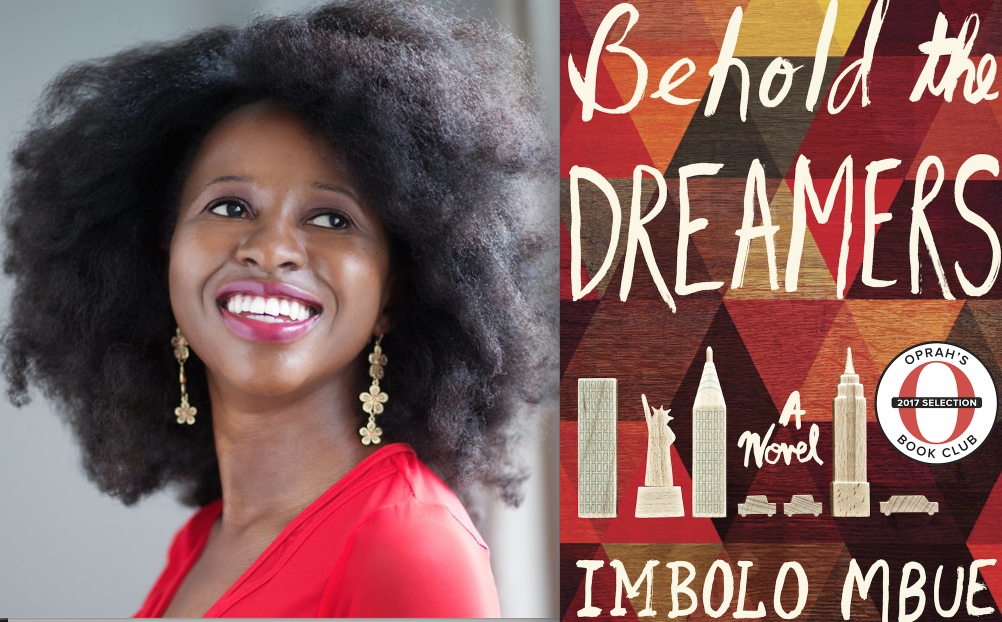
BEHOLD THE DREAMERS: Imbolo Mbue

BEHOLD THE DREAMERS is a fairly simple story and one we hear often: migrants making their way to America to establish a better life. Front page news and a common theme in fiction. However, in this novel, the first published by the natural storyteller, Imbolo Mbue, a couple from Cameroon face an added obstacle: the financial crisis and subsequent recession. 

He was leaving Cameroon in a month! Leaving to certainly not return after three months. Who traveled to America only to return to a future of nothingness in Cameron after a mere three months? Not young men like him, not people facing a future of poverty and despondency in their own country. No, people like him did not visit America. They got there and stayed there until they could return home as conquerors.

Hard to find jobs when so much of the workforce is out of work and this plot element is front and center. Jende has had the good fortune, through an enterprising cousin, to land a well-paid position as chauffeur for a senior executive at Lehman Brothers. Jende’s determined wife, Neni, is studying to complete an associate's degree in order to progress to schooling as a pharmacist, but takes a summer job as housekeeper for the family. Until the crisis, they are optimistic. Eyes on the American dream.

Nothing in the world of New York movers and shakers is simple, nor is the struggle of the immigrant, and, as expected, their worlds collide in the face of the Wall Street debacle. The divide between rich and poor, white and black, and the core question of what it means to live a good life, is present on every page, but in the hands of this talented writer, never oppressive. We see the truth, we feel the heartbreak and the struggle. It would be easy to presume an ending, but do not: nothing is exactly as it seems. 

I saw this man who used to drive another executive at Lehman Brothers. We used to sit together outside the building sometimes; he was a fresh round man. I saw him downtown. The man looked like he had his last good meal a year ago. He has not been able to find another job. He says too many people want to be chauffeurs now. Even people who used to be police and people with fine college degrees, they want to be chauffeurs. Everyone is losing jobs everywhere and looking for new jobs, anything to pay bills. 

The mix of characters is just right. The financier, his social climbing wife and sons. The kindly staff assistant, the caring housekeeper. The Cameroon cousin and the immigration lawyer with tall tales to tell. A church which may or may not provide spiritual solace. All living complex lives suffering from a need for simplicity. 

Told more in dialogue than prose, the occasional descriptive passages perfectly render New York at the time [as a migrant from that great city, I can attest to the validity.] You will care deeply about Jende and Nini from page one, you will root for them, and worry about them, and also be shocked by their decisions, which, in truth, make perfect sense and which, in the end, like most good stories, has to do with who we are when far from what feels like home.  

Realistic and thoughtful, it’s a novel of cultures clashing and good people stumbling into the ravines of despair and misplaced hopes, and unexpected redemption. 


Mbue has just published her second novel, the highly lauded HOW BEAUTIFUL WE WERE, which takes place in Africa and deals with environmental degradation. I will report back.


13 January 2021

The Surreal Fits the Times: Charles Baxter


Charles Baxter has been writing quirky unforgettable characters for many years, more often in short stories than longer fiction, so this sixth novel, the first in a long time, is most welcome. I’m happy to report he is in fine form – an eccentric cast of characters trying to ground themselves in challenging times and in uncertain relationships. The novel asks the reader to observe closely, to read between the lines and peer into the shadows, in order to place ourselves right along side the action as the cast searches for truths, or at least, a sense of order.

And, given the strange times we live in, and the sense of displacement and disconnection rampant, the novel could not fit what ails us more. Thankfully, there is hopefulness in the strangeness. 

Like a spool of yarn, of many colors, the novel reveals in strands, a bit at a time, and takes the reader along, although I cannot give you a plot or even a meaningful summary: it’s just seekers of truths, meeting in strange ways, colliding, in effect, and then rolling along to an undefined destination, unravelling further as they go.

With his backpack, shabby sweater, jeans, and running shoes, he fit right in. He began to talk to himself in a low, eloquent mutter. As his money dwindled and his credit cards maxed out, he considered his situation dispassionately, as if his life were being lived by someone else. He felt himself expanding into invisibility. Soon, he imagined, no one would be able to see him at all. He would just fade away and vanish before taking up occupancy in the spirit world where he would be as unwelcome as he was here.

An aging couple searching for their missing adult son, a former actor. A group of retirees who take their walks at the mall. An oddball young woman taking a weird hallucinogenic and her bully lover who may or may be a domestic terrorist. An activist group supposedly helping the poor and the needy, but under the auspices of a shadowy figure who may or may not exist. Another sort-of collective called Sandmen who target street dwellers. And, a Trump-like President and Cabinet perpetuating a philosophy reminiscent of Ayn Rand’s Objectivism, for whom “charity is a sin... because it encouraged losers.” Oh my.

It’s not magical realism, although sometimes it feels that way. It’s not science-fiction, although it could be. It takes place in Minneapolis, Baxter’s personal home and favored landscape, so the just-plain-folk setting is a stark contrast to the idiosyncratic cast and ever-so-gently fantastical underpinnings. It all works.

We were younger then. We believed everything. We thought love could save the world... But I don’t believe movies anymore. I don’t believe in them, and I don’t believe their stories. They don’t seem real to me – just fantasy. Robots in space? Superheroes? Characters who look like Cary Grant? The only person who ever looked like Cary Grant was Cary Grants. Fantasy. And novels. All of it. It all looks made up now. Bunch of imaginary puppets on strings, dancing around. When did we lost our grip on reality?

There is a subtle lampooning of our current political climate which provides some insight into the otherwise murky plot and underneath the surface of all is deeply held belief, grief, anger, fear and hope. He’s a most unusual writer and this is a most unusual novel, so if you’re looking for the different, read THE SUN COLLECTIVE. Stranger than even the news and infinitely more fun. 


29 November 2020

WOW: A BURNING is a small novel with a huge global punch


According to the book jacket, Megha Majumdar was born and raised in Kolkata, India, then moved to the U.S. to attend Harvard University, followed by graduate school in social anthropology at Johns Hopkins University. She works as an editor at Catapult in NYC, an online literary site. She is already a literary force. 


I suppose in her spare time she wrote a novel and an extraordinary novel it is! An original, expertly crafted and insightful page-turner, exposing how politics and opportunism permeate every walk of life and every individual, and there are many in India, with aspirations for a better life.


Every character, except the young woman who gets the ball rolling by posting a social media comment related to terrorism, resulting in her arrest and imprisonment, makes a deal with the devil for themselves, and what they would like to accomplish, rather than stand up for innocence. A BURNING begs the question: what is the right thing for all versus what is most right for oneself. This novel is a punch to the gut story from page one that nonetheless keeps you hoping the end might turn out better than it seems and/or the end might justify the means. 


And that is the very essence of a morality tale — can the end ever justify the means when a life is at stake and when truth is buried for personal gain? 


In an effort to avoid spoilers, I won’t say anything more about the plot or the ending. I will say that the writing is concise and descriptive — you will feel as if you are there, within prison walls and without, with the victim, an aspiring actress/friend, a physical education teacher who wants to make a difference for more than one student, and a myriad of media and political influencers who manipulate the outcome. 


This is one of the most hard to put down novels I’ve read, and that’s saying something, considering all the good fiction that’s been published just this year. [Read the reviews.]


As a rule, I include quotes from the books I recommend. In truth, the language in this novel is not what makes the book so grand — it’s not unusually eloquent or lyrical. It's nearly journalistic. You may feel like you are reading true crime without the excess of that genre. And, whatever I might extract, out of context, won’t make much sense. I promise you — every word is right and every word matters. She is a writer to reckon with. 


Although the story takes place in India, the characters, the timeline, the fallout and the portent apply anywhere in the world right now. A microcosm of modern times. Worthy of the all the awards and award nominations it's received and would be a great read for book groups. 


Hard to miss this one - on most every best of list. 

20 September 2020

A Fresh Voice: Fresh Water for Flowers by Valerie Perrin


How wonderful to discover a new voice - not new in Europe, but to us. Valerie Perrin is a French screenwriter and photogrpher, also an award-winning novelist, but this is her first fiction to publish in English. The sort of book that calls to you when over and hard to put down. 
Our unforgettable heroine, Violette, is a cemetery keeper. Not a job that often comes to mind but a fascination in fiction. Note: the name Violette, like the flower, signifies modesty, also faithfulness, and is said to be a good luck symbol for women. In this case, yes and no. 
Day and night, Violette arranges funerals and supervises groundskeeping. She keeps a journal of interment for those who could not be there. She invites the regular mourners to tea. She comes to know the personal story of those encrypted, and the details, sometimes strange of their burials, as if extended family. We meet many of them through her reflections. 
Violette understands that how we are buried reflects how we lived. Despite an early life of Dickensian hardship, and a catastrophic loss that has rendered her an iconoclast, she remains life affirming.
I like giving life. Sowing, watering, harvesting. And starting again, every year. I like life just as it is today. Bathed in sunshine, I like being the essence of things. 
When Violette is not recording, receiving visitors, planning events or gardening, she feeds a posse of cats and a dog who reside on the grounds, and she spends time with her family of cohorts: the gravedigger, the mortuary brothers, the priest. She knows their stories; they accept her without knowing more than she wishes to reveal. She appreciates the safety net. 
The weather is magnificent. The May sun caresses the soil I'm turning over. Three of the older cats rediscover chase after their imaginary mice together. A few wary blackbirds sing a bit further along. 
As much as Violette is present in the moment, she is haunted by her past and the thread of the novel is a series of interlocking revelations of what came before. A mystery to be solved and within which is a profound understanding of human frailty. as well as the capacity to evolve. All of which ultimately forces her to face her tragedy and embrace the future. 
However, not until the mystery is solved, and here is another beauty in the construct: we learn, as she learns, bit by bit, painfully, the surprising truths she has evaded and which is essential for her to heal. 

it's a glorious read. Touching, thought provoking, slow but also taut: a tribute to our humanity and our power to heal. Another must read. 


26 August 2020

Hamnet: To Be Read - Not To Be Missed

Maggie O'Farrell 
Irish born - lives in London

Maggie O'Farrell, an accomplished and wonderful writer, steps into a new league with this wholly original readable stunning work of fiction. Can you tell I think it's divine?


The tragic but surprisingly heartwarming tale recounts the largely imagined early life of Shakespeare, his enigmatic wife, Agnes, also known as Anne, and the death of their eleven year-old son, Hamnet. The inspiration for what many consider the bard’s greatest play, Hamlet, written four years after the boy’s death. And what a character the young Hamnet is: as ephemeral and existential as his namesake.


Hamnet’s mind, however, is in another place. For a long time, he could hear his mother and his sisters, his aunt and his grandmother. He was aware of them, around him, giving him medicines, speaking to him, touching his skin. Now, though, they have receded. He is elsewhere, in a landscape he doesn’t recognize. It is its cool here, and quiet. He is alone. Snow is falling, softly irrevocably, on and on. It piles up on the ground around him, covering paths and steps and rocks; it weighs down the branches of trees, it transforms everything into whiteness, blankness, stasis. The silence, the cool, the altered silver light of it is something more than soothing to him. 


So little is known about Shakespeare’s early life so O’Farrell has woven what is known with what she has exquisitely invented. Once again, in this fiction, the telling is what matters most: mesmerizing prose, nearly Elizabethan poetry, but not, and not couplets, with stunning detail, for the landscape, the scope, and, at the heart of this tale, the grief of losing a child. 


So she cannot bear their gaze, cannot meet their eyes. She doesn’t want their sympathy and their prayers and their murmured words. She hates the way people part to let them past and then, behind them, regroup, erasing their passage, as if it were nothing, as if it never were. She wishes to scratch the ground, perhaps with a hoe, to score the streets behind her, so that there will forever be a mark, for it always to be known that this way Hamlet came. He was here. 


The story is as much about Agnes, a shaman, loving wife and mother, as it is about William. We meet their families. We inhabit the village life of late 16th century into the 17th, on to Stratford and London. You will see and hear and scent these worlds and feel nearly every heartbeat of every one of the many compelling characters. 


Captivating from page one to the last powerful scenes in London at the playhouse where Shakespeare made his mark. 


The crowd around her, she cannot help but notice, is entirely still. No one speaks. No one moves. Everyone is entirely focused on these actors and what they are saying. Gone is the jostling, whimpering, brawling, pie-chewing mass and in its place a silent, awed congregation. It is as if a magician or sorcerer has waved his staff over the place and turned them all to stone.


My call for the Booker prize. A phenomenally elegant work of fiction. Happy reading. 


27 July 2020

Here We Are: My Friendship with Philip Roth by Benjamin Taylor

When it comes to the writer Philip Roth, there are two camps: those who dismiss him as a sex-obsessed east coast Jewish highbrow, and those who revere his prose and insights. I am a member of the latter. I’ve long admired his exceptional talent, also his profound understanding of the dark side of humanity, and I appreciate his intention to reflect on political and sexual power, and the hypocrisy they breed, which is the common thread in his fiction. 


He would have had the seat at the head of my fantasy dinner party table, based on what I’ve learned about him over the years, through tributes and through his words, and never more so having read this beautifully crafted memoir of late life friendship with writer/professor Benjamin Taylor.


The memoir is a reflection on Roth as a man more than writer, and these resonate with his writings. Lots of anecdotes. For example, he lived on the upper west side of Manhattan most of his life [as well as a country home in CT] and was frequently recognized. In fact, a street-seller displayed only Roth books for years in front of Zabar’s [the famous upper west side market] many of them signed. Taylor recounts his resistance to personal notoriety: “At dinner one night in an. Indian restaurant on Broadway, the actor Richard Thomas, spruce in a white beard, said to Philip, ‘You’re the writer whose meant the most to me.’… Some variant of the encounter occurred when we went to any public place … ‘Let’s have dinner on the East Side,’ Philip would occasionally say. ‘Nobody knows me over there.’ Prompt refutation came in a favorite eatery on Third when a woman at the bar beckoned to me with a long forefinger. ‘Young man, is that Philip Roth you’re with?’ I nodded. She passed me her card. ‘Tell him I’ve got a classic six on Park and am available.’”


I missed my chance to chat with the great man not once but twice. Roughly twenty years ago, I too was in an uptown restaurant with friends when I saw him enter and walk toward a coat rack next to our table. Our eyes locked for a moment and I’m sure he feared I would intrude on his solitude, which I respected. On the way out, he looked up at me from his New Yorker magazine as I passed. He didn’t smile, but again, our eyes locked, and I wanted so much to sit down and engage him in conversation, but I refrained. A friend I was with who didn’t recognize him asked me who he was, and when I told her she said, ‘My Lord, the way you looked at him, he might have been Paul McCartney.’ To me, he was. 


A couple of years later, I was lucky enough to attend the National Book Awards with a good friend who invited me because Roth was receiving a lifetime achievement award. His speech was mesmerizing. On the way out [he was one of the first to leave and Taylor confirms a shyness among strangers] he was waiting for his car to pull up, and we ours, and again, our eyes met, and this time I smiled and said congratulations, and he nodded appreciably. I so wish I had known him and in this memoir, which is a charming and touching tribute, I feel I know him better.


For a man who has been called, like his contemporaries and friends Updike and Bellow, a misogynist, there were many women, friends and ex-lovers, at his bedside as he lay dying, and many more women singing his praises when he passed. [I recommend the New Yorker Radio Hour podcast tribute.] He was an exacting and determined human being, not easy to live with, as he was the first to admit, and opinionated on a wide array of subjects. However he also had a great sense of humor, tended to pontificate in a Socratic way, and relied on music, as well as friendship, for sustenance, particularly during the many years illness and pain. 


He was the sort of writer and thinker who pondered the imponderable. However he had no use for religion and no patience for platitude. Taylor tells this story about strolling with Philip and musing on religion after passing the Atheists booth at Columbus Center. "‘Religions are the refuge of the weak-minded. I’d dispense with all the art, music and even poetry they’ve engendered if we could finally be free of them.’ ‘The B-minor Mass? The Sistine ceiling? George Herbert’s poems?’A dog walker comes past with eight or ten doggies of all sizes and shapes. ‘You see that?’ he says. Perfect concord among the breeds. The border collies admire the Heinz fifty-sevens. The Newfoundlands would make love to the dachshunds if they could. And why? Because dogs are wise enough to have no religion.’”


Roth never won the Nobel Prize, which still pains his fans, and apparently saddened him. However his body of work, numerous awards and many admirers, are high honors. And, he was a loving friend - this memoir may be more meaningful than the literary analysis and biography[s] still to come, most notably his approved biographer, Blake Bailey’s, whose bio will publish early next year. 


RIP Philip Roth and thank you Benjamin Taylor for sharing your story. 

Available now in hardcover and for your favorite e-reader. Happy reading. 

12 June 2020

VALENTINE: Hard times in a hard place


It is rare to discover a page-turning plot told in mesmerizing language, and featuring a cast of haunting true-to-life characters. And, although set in west Texas in the 70s, relevant to all that ails us, still.


This is VALENTINE, remarkably a first novel by a gifted writer. 


From page one, you will not believe the power of the prose – colorful descriptions of a landscape that make you feel the dry brush against your skin and the scent of oil in your nose. And, a cast of characters who pop off the page. Honestly, this book is powerful.


The set up reminded me of another terrific novel, published last year: DISAPPEARING EARTH, by Julie Philips. Both begin with a horrific event, in this case a violent assault against an adolescent Mexican girl, and spend the rest of the novel revealing the reverberations through the lives of the women residents. In this book, all the women, and children, live on one street, and they watch out for each other and/or judge each other – unwed mothers, widows, women who give up and leave, daughters tending to fathers or longing for mothers, and one woman who stands up for the raped girl, all struggling to overcome misogyny and racism and make sense of their lives, and their futures.


Ginny will remember pushing her daughter’s fine brown hair out of her eyes, the smell of oatmeal and Ivory soap, the chocolate on her chin from the Valentine’s candy she’s been eating all morning, and the shine on her cheeks from the suntain lotion Ginny swiped across her face before they left the house. Ginny’s hand trembles and she thinks, Take her. Make it work somehow. But Debra Ann scoots away, saying, Quit it. Because to her, this is still like any other Sunday morning and her mother might be nagging her about any of the usual things. To her, even Ginny’s tears have become old hat.


The Viet Nam war hovers over the story, contributing to the layers of fear and instability that permeate this town, maybe many during those years, including broken war veterans who suffer and/or implode, usually at the expense of their women and children.


When they get home, all their problems will still be there. They will still be a young man and a young woman with the worst war of their lives just a few years behind them, with worries and fears and a little girl to feed and love. They will fight over money and sex, and whose turn it is to mow the yard, wash the dishes, pay the bills. In a few years, Corrine will threaten to tear it all down when she falls in love with the social studies teacher, and a few years after that, Potter will do something similar. And each time they will grit their teeth and wait to love each other again, and when they do, it will be a wonder.


Wetmore’s ability to see into the heart of her characters and reflect so profoundly on the human condition, and what ails us all, reminds me of Marilyn Robinson, one of the modern masters [and one of Wetmore’s teachers at Iowa Writers Workshop.] She often comments on what will come after we leave the story, making the few months of the novel seem like she has visited a generation and beyond.


26 April 2020

Scheherazade in Palestine.

Colum McCann Spins Another Gorgeous Novel.


The great Colum McCann
“Apeirogon” which means a shape of infinite sides, is based on the true story of a Palestinian and Israeli who forged an unusual friendship in the hopes of peace in the region. Both men lost their daughters to terrorism. Fodder enough for good fiction in a place where division and hostility prevail.

What makes the novel mesmerizing is the telling. McCann has written 1001 snippets – some a couple of pages, others only one line – and includes fascinating factoids as far afield as how birds and bats were once used as weapons [birds are a constant metaphor, reflecting, I suspect, on flight as freedom, and the cover is adorned with doves]. Also how certain words, like mayday, came to be, how Israeli irrigation tunnels were dug by the same Sandhogs [immigrants and freed slaves] who dug NYC subway tunnels, how Einstein and Freud commiserated over the rise of fascism or Francoise Mitterand’s favorite meal.

Fascinations embedded into the tapestry of two family tragedies and a shared determination to advocate for unity.

It’s a WOW work of fiction. To my mind, Pulitzer prize-worthy, but not for everyone. This novel requires a commitment to reading all 1001 passages, as each thread and every image has meaning. 

A homespun set of photographs complement the telling. 

The story sounds more sobering than it is, although surely painful in parts. Also heart-wrenching and mind-bending. McCann is a writer of unusual excellence. [If you haven’t read his National Book Award winning “Let the Great World Spin” I recommend highly, and its protagonist, the high wire walker Phillipe Petit, makes an appearance here as well.]

The first 500 sections lead up to an intermezzo in which the protagonists, Bassam Aramin and Rami Elhanan, speak directly. From there, 500 additional short passages dwindle down. Plus one. And every one, even though occasionally repetitive, plays an important role in telling the tale.

This is a rare glimpse into the lives lived in this region – an ancient spiritual people devastated by politics and greed. Also an inspiring view of two men who might have retaliated or allowed anger to define them, who chose peace instead.

And oh, the storytelling, the prose and the fascinating information. Consider these, but a few of the many examples.

They seemed the most unlikely of friends, even beyond the obvious, one being Israeli, the other Palestinian. They had met first in the Everest Hotel. On a Thursday. It was that time of the evening when Beit Jala willed itself to cool down: the land breathed, the sun dipped, the birds rose, the hills took on a sudden burst of dark green.

Riot, from the Old French, rioter: to dispute, to quarrel, to engage in argument. Riote: noise, debate, disorder, rash action. Also, perhaps, from the Latin reguire, meaning to roar.

On the day of judgment, in Muslim tradition, it is said that a fine wire rope will be stung from the top of the Haram al-Sharif wall on the west to the summit of the Mount of Olives in the east where Christ and Muhammad will both sit in judgment. The righteous will be preserved by angels and they will cross quickly, but the wicked will fall headlong into the valley.

The reason a falcon is hooded is exactly the reason a falconer is not: the birds can see so well that they would most likely be distracted by other prey much further away. The falconer hoods the bird and waits. He wants the falcon to only see what he sees.

In Jewish tradition it is forbidden to throw away writings invoking the name of God. Prayer books. Scrolls. Encyclopedias. Garments. Tefillin straps. Even pamphlets or cartoon books. Instead of being destroyed, the texts are interred in a genizah, a burial place for the written word.

Released last month in hardcover and for e-readers. These days, local book stores will deliver online orders and they need our support. Libraries, mostly closed, offer e-reading downloads.  

A masterful and profound work of fiction in which to immerse yourself while social distancing. Stay safe and stay well. 

01 April 2020

Go somewhere without leaving home.

Anthologies are a great way to go
So, we’re stuck at home. Better safe than sorry. Some are home schooling, bravo to all of you. Some are working from home, good job. Others are out providing essential services, thank you.

We've got streaming stations, too many TV stations and On-Demand. I suspect, we’re adding items to our Watch Lists as fast as the virus is spreading. We need things to look forward to.

And, of course, you are listening to the news. More sobering by the day. How long will this last? There is only one answer: too long.

Unless you are a genuine recluse, it’s a hard time. Even a loner enjoys occasional socialization. I can write all day, but I prefer writing at a café. I miss lunch with friends and dinner out with the boyfriend. Small sacrifices, yes, but we all feel the pinch. Many of us are taking walks or bike rides, maintaining social distance, please. Nevertheless, the days are long, and the stress level is high.

Whatever your circumstance, we are living in strange times. Even your elders, like me, have never experienced anything quite like this. Not in this country. Uncertainty is the tie that binds right now, across the globe.

Reading [and music] are the great equalizers, beyond social media or blogs or Internet news. They have their place, of course, but they tend to fuel the fires of anxiety. If we are to stay sane, and support our immune systems, which suffer under stress, read fiction. Whatever your favorite genre, read. Get out of your head. Away from what ails us. 
Some of my very favorite collections

Although we have too much time on our hands, our attention spans are justifiably under assault, so I recommend short stories. There are a zillion of them in print and online and in a matter of minutes, maybe a half an hour, you might ground yourself in what truly matters.

From the Bible to fairy tales to Sherlock Holmes, stories fortify connections more than divides. You may prefer the traditionalists – Hawthorne and Hemingway, Fitzgerald or O’Connor. Or the early modern masters, like Grace Paley and Ann Beattie. 

Thanks to The New Yorker [one of the only commercial magazines still publishing short stories] you can peruse the archives and read stories by greats like E. L. Doctorow and Alice Munro, or grand Irish storytellers, like William Trevor and Edna O’Brien. More recently, you’ll find the phenomenal Lauren Groff and Paul Yoon.

Some of my favorites, Mary Gordon and Tessa Hadley, layer stories like cake. Award-winning novels have been strung together like pearls with short stories by Elizabeth Strout, Jennifer Egan and Bernadine Evaristo, just as James Joyce did in his day.

Reading a short story first thing in the morning softens the edges of harsh news. At bedtime, the most poignant tale makes for sweeter dreams than our current reality.

There are many stories published online in literary e-zines and also many short story podcasts. I prefer The New Yorker Fiction or The Writer’s Voice – listening is like sitting by the fireside. Audible and Kindle offer some stories for free. Soothes the soul. Oh how we need that now.

BTW, although the OC Library system, like others across the country, is shuttered, there are several digital systems available and most local bookstores are taking online orders. They need our support. 

A gold mine of short reading awaits. Stay safe, stay well. 

12 March 2020

Two Gems: Weather and ArtForum

Jenny Offill
The original and unusual novel, Department of Speculation, reviewed here in 2014, was Jenny Offill’s breakthrough book, written in short takes that reveal contemporary lives and challenges. Her latest novel, Weather, which deals abstractly with the climate crisis, is told in the same format and has received glowing reviews. I agree.

The protagonist, a promising graduate student trapped by her brother’s addiction, goes to work answering mail for a Q&A podcast, and ends up dealing with the most neurotic and fearful among us, from whom she too learns a few things, but which begins to unravel her core equanimity. In the end, a human life, and human psyche, is as unpredictable as weather, despite meteorologists who suggest otherwise – as variable and as fragile as the planet.

This little book is a book that demands underlined passages and scribbles in the margins. So much info and insight. I was consistently shaking my head in wonder at her wisdom, not to mention her cleverly crafted prose. It’s a gem, truly, and I suggest you read at least twice, or at least very slowly. A post-modern novel as sharply observed as Bronté in her time.

Sylvia tells the audience that the only reason we think humans are the height of evolution is that we have chosen to privilege certain things above other things. For example, if we privileged the sense of smell, dogs would be deemed more evolved. After all, they have about three hundred million olfactory receptors in their noses compared to our six million. If we privileged longevity, it would be bristlecone pines which can live for several thousand years. And you could make a case that banana slugs are sexcually superior to us. They are hermaphrodites who mate up to three times a day.

Cesar Aira
Artforum, by César Aira, at first sight looks like an art gallery catalog, but without images, and is a novella based on an Argentinian intellectual’s obsession with Artforum magazine. Not so much the reading of them as the collecting of them. He gathers them, obsessively, into his arms and into his home for posterity, and goes to great lengths to protect them from the elements, although, in the end, nothing can be protected perfectly. Any book lover understands the compulsion to pile and shelve books. As essential as the reading.

This small gem is an incredibly simple concept: from chapter to chapter, a life is revealed through his search for current and past editions and the people he encounters along the way. Quirky and delightful, what seems like interrelated stories combine to exemplify one man who, in this seemingly small passion, finds an opportunity to fill the spaces between an otherwise predictably linear existence.

Leaving aside such subtleties, or digging deeper into them, the craziness of buying all of them resided in the excess of pleasure, or at least, gratification. I had had a stroke of luck, there they were in my avid hands, as incredible as they were undeniable, material, tangible. We always count on having strokes of luck, but on a different and fluctuating plane in time, not in the present. Now it was the present. The present and Artforum that expressed it now coincided. That was enough to make me slightly giddy with incredulity.

13 December 2019

Quichotte by Salman Rushdie


Not for everyone, for sure, QUICHOTTE [pronounced key-shot] fluctuates between satire and magical realism, and within the blueprint of Cervantes’ Don Quixote mixed with Moby Dick, Pinocchio and a smattering of mythology. You will enjoy the references and the parody. 
Between the Gods and mortal men and women, there hung a veil, and its name was maya. The truth was the fabled world of the gods was the real one, while the supposedly actual world inhabited by human beings was an illusion, and maya, the veil of illusion, was the magic by which the gods persuaded men and women that their illusory world was real.
A lost soul turned dreamer searches for his idealized beloved. A companion, in the form of an imagined child, comes to life. An opportunistic businessman tramples ethics. An adoring wife hopes to secure the family legacy with philanthropy [think Sacklers.] A Bollywood actress turned talk show host struggles under the weight of celebrity [and fentanyl.] And, a high-profile advocate pedals integrity to the apathetic.
She was a privileged woman complaining about small things. A woman whose life was lived on the surface, who had chosen superficiality, had no right to complain about the absence of depth. Human life was lived between two chasms, a Russian writer had said, the one that preceded our birth, “the cradle rocks above an abyss,” and the one we were all “heading for, at some forty-five hundred heartbeats an hour].”
            Brown [Indian mostly] confronting white [white supremacists mostly] and all in fear of the “other.” Sound familiar?
            Yes, it’s a mixed-up story, often humorous, sometimes maddening, and with an often confusing set of characters – multiple characters with multiple names on parallel but intersecting paths. Rushdie is also sketching a tale of what-ifs and false narratives. And, for good measure, includes sexually damaged women and sexually mutable men. No stone unturned here.
            Rushdie, no stranger to pointing the finger at evil-doers [once subject to a fatwa by Iranian religious leaders] seems to have decided to go after all the quirks of Western civilization, most notably capitalism and pop-culture, aided and abetted by. 24/7 TV. He also cites Zen and the Art of Motorcycle Maintenance and The Hitchhiker’s Guide to the Galaxy, books favored by wanderers.
            It was bewildering at such an advanced age to understand that the narrative of your family which you had carried within you – within which, in a way, you had lived – was false, or, at the very least, that you had been ignorant of its most essential truth, which had been kept from you. Not to be told the whole truth, as Sister with her legal expertise would know perfectly well, was to be told a lie.
            Frankly, I loved reading this novel. I looked forward to a block of time to immerse myself in his ingenuity – one must read for prolonged periods of time or get totally lost. I laughed. I cringed at painful truths. I marveled at his command of language and history. On the other hand, Rushdie once too often goes off the rails – rambling beyond a willing suspension of disbelief – and I agree with the critics who suggest he reign in pontification for the sake of storytelling.
            Perhaps Rushdie created in this novel his own impossible dream, where fictional characters bring out the best in each other, battle windmills and redeem themselves of their sins, although along the way, they create messes for the unsuspecting, or the opportunistic, to deal with. 
            Read at your own risk. If nothing else, Quichotte is exquisitely crafted and unforgettable.