21 March 2014

Spring Reading?

The reading pile, forever calling to me, forever too tall and growing, seems heavily laden right now with stories antithetical to the spring season. So be it. I do love contrast.

I am currently re-reading "Mary Coin" by Marisa Silver, a truly beautiful novel published last year that invents the lives and crossroads of Dorothea Lange and the Depression era farm worker who became immortalized in the photograph "Migrant Mother." I reviewed the book favorably last year and now my book group will discuss, so [happily] another reading. However, the landscape of the story is bleak, the era distressing, and women's lives particularly challenging, so hardly the vitality of spring. Think tiny purple crocus trapped under a hard frost.

In honor of the 75th anniversary of "The Grapes of Wrath" by John Steinbeck, I am joining a countrywide movement promoted by NPR to re-read the novel. I haven't read this since college [and don't remember any of it] so I look forward to revisiting Steinbeck's elegant prose and gripping landscape, although this too will be a dreary place, like barren branches of a late-bloomer.

And then, for no special reason other than I often like to go back to beginnings, I will read Saul Bellow's award-winner: "The Adventures of Augie March." I was re-reading some early Philip Roth recently and he was a great admirer of the Nobel Prize winner and I confess I never got to this iconic novel so the time has come. Augie too grew up during the Depression so I guess there is a real theme here. This character is said to be quite dynamic, like Jasmine in full bloom.

And because I have to wind my way out of the Depression era, I am going to read a book that only recently came to my attention: "Edisto" by Padgett Powell. Published thirty years ago, the novel has had a recent resurgence, with comparison to Truman Capote, J. D. Salinger, and Flannery O'Connor. A coming-of-age story of a rambunctious boy, perhaps this one will spring fully into the season.


Perhaps these are the right books to read as the country finally begins to lift itself out of the Great Recession, albeit slowly and still painfully. Or, in commiseration with my dear friends on the east coast, my reading list is trapped in the long winter, so even if the calendar and the stars suggest spring, Mother Nature says no, not yet. So I will linger in the chill a bit longer, in literary terms, that is. Southern California is lovely in March.

14 March 2014

Ride the Slightly Wild Side with Jess Walter

Jess Walter is indeed a 10.

Many, perhaps most of us discovered the great Jess Walter with his most recent success, "Beautiful Ruins" which I reviewed favorably last year. Here was a powerful descriptive voice with an engaging storytelling style and a delightfully original tale set from Italy to Hollywood and from the fifties to the present.
Ruins is what reviewers call a break-out novel, so I expected there were other works tucked away, perhaps out of print, so imagine my surprise when I discovered that JW has a large body of work, including an Edgar winner and a National Book Award nominee. Why hadn't I heard of this writer before? I pay attention, I watch for the sleepers, but I missed him. However, now he is fully found.
When interesting writers come to me later in their writing lives, I go back to their backlist, and I downloaded several of JW's books, all markedly different, all original, all compelling writing with powerful narrative thrust and edgy characters. I am officially hooked!
First I read "The Financial Lives of the Poets" a quirky tale of a marriage imploding under the weight of the economy, drugs, boys gone wild and men unwilling to grow up. As funny as it was wise, I even recommended the novel to a snob of a reader-friend of mine who relished every bit of it. Great writing always wins. 

Then I read his recent collection of stories, "We Live in Water" which is, to my mind, and I adore short stories, not as grand as the long fiction, but oh so interesting and again, unforgettable characters and scenarios.
I read next "The Zero" which other reviewers compared to Kafka and which rocked me to the core - an intimate portrait of the after-shocks of 9/11 with a focus on one emergency responder, and told in a way that it might have been any of us. I will never forget this cop. I want to soothe his weary brow.
Now, "Land of the Blind" which may be my favorite. A little mystery, a lot of heart, a novel filled with such a collection of strivers and the lonely it might have been the basis for a Beatles song [think Eleanor Rigby.] And all in the context of the technology boom and the capitalist mania before and during the economic collapse. A coming of age story without dwelling on the coming, which I especially appreciated - we know these characters, and we care about them, without stripping them to the bone.
Did I mention that his novels mostly take place in Washington State - Spokane and Seattle - which may become for JW what Newark was for Philip Roth. Yes, he's so good I speak his name with the master.

"Children know what they are. Try telling a fat kid he looks good, or a child who is a bad athlete that he just needs to try harder. He knows better. But as adults, we start to believe the bullshit. We tell ourselves that cheating on our taxes isn't really stealing and that the job candidate with long legs is really a better fit for the company... We come up with rationalizations and justifications after the fact, and then we convince ourselves that these things are true. We pretend we are doing the best we can."
JW writes with contemporary flair about seemingly real people in the here and now dealing with the same sort of struggles and longings as the rest of us albeit in sometimes unfathomable circumstance. He writes men and women with equal flair and reveals the flaws in all of us with unflinching honesty and acceptance.
"The small things I took for granted then torture me now in their simple perfection: a plate of pancakes, a hand on my shoulder, a look of deep concern. You have no idea when you're so eager to escape your own house, your own life, your own childhood, of the sad truth that no one will ever care for you like that again."
Oh so true. And rarely do you find such clarity and honesty in the midst of a wild tale. I'm going to read "Citizen Vince" next which won the Edgar Award. Join me. JW is a great ride.

22 February 2014

Alice Walker's MERIDIAN: Timeless

The great Alice Walker
PBS recently aired a fascinating documentary on the writer Alice Walker who rose literally from a hardscrabble existence to reverence as writer and activist. I have always been a fan of her clear prose and rich characters, and I was reminded that I had never read Meridian, her second novel, which is now available for e-readers, as are all her works.
While The Color Purple, The Temple of My Familiar, and Possessing the Secret of Joy are novels worthy of their accolades and readership, I found this early work especially interesting as I felt I was taking Walker's journey to activism with her.
As an aside, when Possessing the Secret of Joy came out, I decided not to read it, the thought of a novel about clitoral mutilation just too hard to bear, but my daughters, who knew I liked great fiction, bought it for me for Mother's Day, so of course, like all the art on the fridge, I had to comply. The great surprise: one of the most fantastic books I've read and yes, deeply embedded with joy despite the subject.
When you re-read a great writer, you nestle into their prose as if you've just run into an old friend. Walker never manipulates her reader, she just tells it like it is. Taking place largely during the sixties, a young woman is thrust into the harsh realities of sex and racism too soon to make sense of it, at first. Living in a small southern black community, she encounters civil rights fighters in black and white, and discovers the depth of the divide between the races, while also discovering her own desire to make a difference.
However the path to change for Meridian, like her people, is fraught with obstacles, not the least of which is her own community, filled with an assortment of unusual and fascinating characters.
"The majority of black townspeople were sympathetic to the Movement from the first, and told Meridian she was doing a good thing... Her mother however was not sympathetic... God separated the sheeps from the goats, and the blacks from the whites."
Meridian is the embodiment of truth. She suffers physically for her own and others' sins: a lightning rod for the storms around her. She struggles to forgive and to be forgiven. She longs for what she cannot describe. The man in her life, Truman, who also evolves over the decade, abandons her after a heated affair for a long-term relationship with a white woman, Lynne, whom he also ultimately abandons in the hopes of rekindling his relationship with Meridian, who by then has found her voice and her mission.
Lynne, like many whites and Jews who supported the civil rights movement, is one of the more terrific characters, for me, as Walker digs deep into her psyche, revealing her motives for activism: a woman who suffers for the oppression perpetrated by her people. Like Germans who sheltered Jews during WWII, were they compassionate or were they compensating for the sins of their nations? Walker also deftly portrays the mixed feelings among towards the whites who invaded their movement and some, like Lynne, who took their men as well.
"By being white, Lynne was guilty of whiteness. Then the question was, is it possible to be guilty of color?"

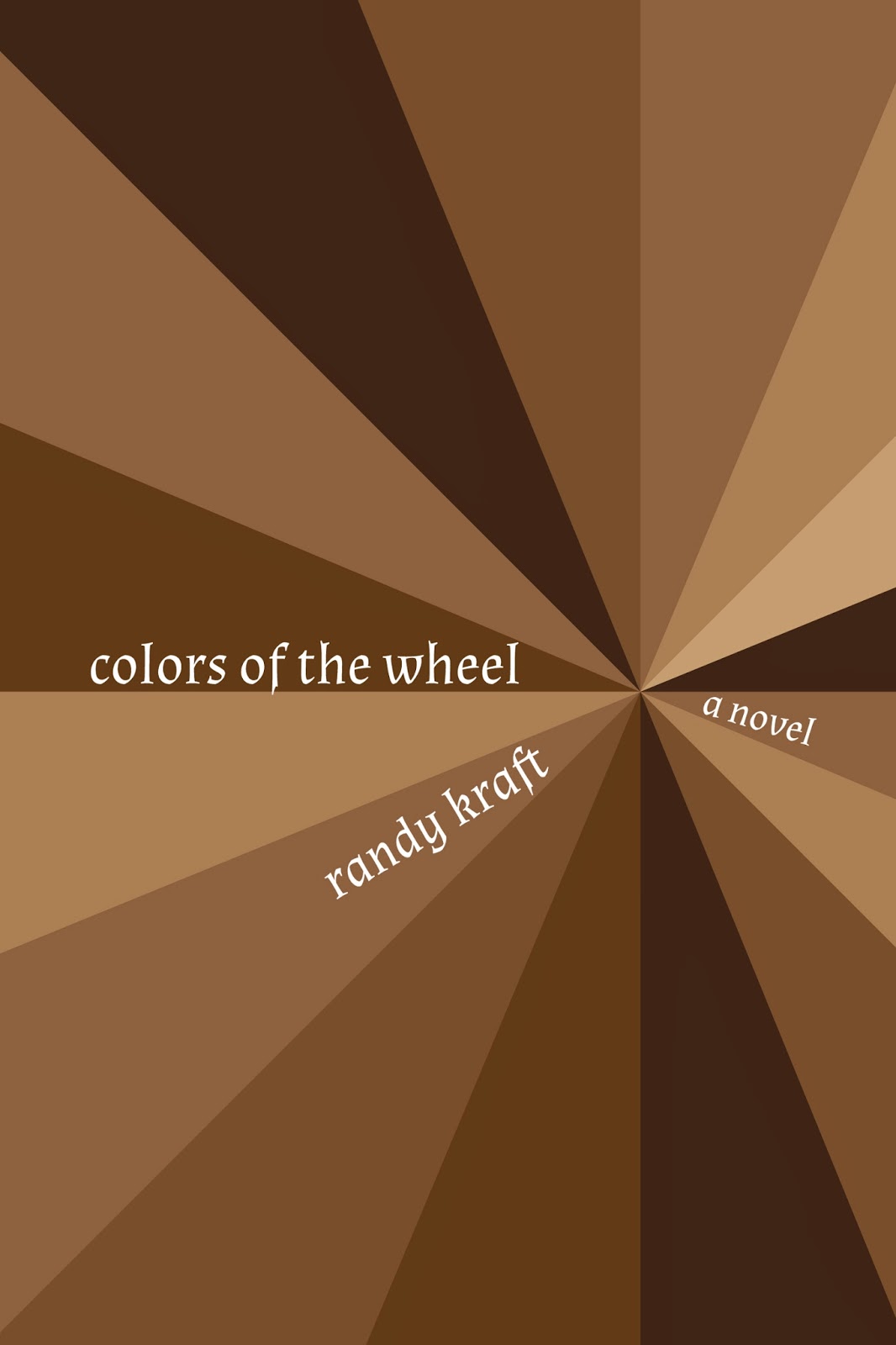
In my own novel, "Colors of the Wheel" I explore contemporary challenges of race, and novels like Meridian that reflect on the civil rights movement confirm that much has changed, and too much hasn't.

04 February 2014

One Book Leads to Another

COLORS OF THE WHEEL was not the first novel I've written, only the first to find its way to publication. Three novels in twenty years: the first a lesson in crafting, and diligence, the second a good book that never found a home, and the third finding its way and some very fine reviews.

Having written one that at last rose to the surface, I find myself with a new confidence, and a greater strength of voice, as I embark on rewriting SIGNS OF LIFE [novel #2]. This one had representation by a big agent and interest by a couple of literary editors at big houses, but did not make the cut, and now, ten years later, I view it with a new set of eyes and a greater set of writing skills and, dare I say, a greater sophistication as a novelist.

After months of the publishing process, which, I was told once long ago by the writer Dani Shapiro, can zap your creative juices, and she was so right, I am back at the keyboard and in the creative zone. I write with a new comfort level. I see characters and prose differently. I also see, painfully, what was missing in that second novel, and what it needs to be enhanced: greater descriptive prose, more attention to the narrative arc, more intensive fluctuating character revelations. I have a good sense of what I need to do to make it better, but I am more than tweaking, I am rewriting and it feels absolutely wonderful.

More wonderfully is that the ten year absence actually provides an opportunity to flesh out the story line with greater meaning. So, that closed door indeed has opened another. Wide.

I've only got the first eight pages right at the moment, but these are critical pages, setting the tone for all those that follow, and where the characters either speak to the reader, or not. As I write, I can almost hear them saying: welcome back creator, you left us too soon.

Among the many pleasures of the writing life is the pleasure of the process.

02 February 2014

Indie Author News: Featured Indie Book: Colors of the Wheel (Randy Kr...

Indie Author News: Featured Indie Book: Colors of the Wheel (Randy Kr...: Featured Indie Book on Indie Author News : Literary Fiction Colors of the Wheel by Randy Kraft. Terrific write-up captures the essence of the novel. Right on-point. Great press. Thanks Indie Author News!!!

25 January 2014

The latest lovely Maggie O'Farrell

Maggie O'Farrell
The English writer Maggie O'Farrell is a favorite of mine. She has a tender voice, lyrical and descriptive. Her characters are real, in fact, we think of them as people we know. Vivid, flawed, heartfelt. In this novel, members of an Irish family return in the heat of a dry summer to their mother's home when they discover their father has disappeared without a word. Parched, you might say, for connections, and understanding.
            I encountered O'Farrell first years ago with "After You'd Gone" a magical little novel that kept you hanging. After that, I read "The Vanishing Act of Esme Lennox" which also focused on siblings and was surprisingly fascinating, followed by my favorite O'Farrell, "The Hand that First Held Mine." That novel subtly and incisively captured the essence of loss and trauma.
            Last year she published "Instructions for a Heatwave" which garnered a few modest reviews. I finally got around to it and yes, it is not as compelling as the others, but still on the upper rung of storytelling. O'Farrell speaks in a lilting tongue here, befitting the setting. I found myself often stopping to re-read a passage because she is so insightful.
            My critique would be only that the plot line too easily comes together. Few surprises, and these not terribly profound. Touching, but not earth-shattering, which they don't always need to be. The nuanced novel is a joy in the hands of a nuanced writer. O'Farrell traffics in tortures of the heart and this story centers on the struggles created by simple misunderstandings. Although when it comes to family dynamics, is anything simple?
            Most impressive to me was the one character [oddly named Aoife as in Eve, Irish style] one of the three siblings whose relationship dominate the tale. She is an undiagnosed dyslexic. O'Farrell deftly depicts the way words formed mazes in her mind, through which she found it hard to find her way. And, like the amazing "The Reader" this character too would rather struggle through life than confess her despair, preferring to accept the opinions of family and friends that she was stupid, disorganized and belligerent, despite her obviously elevated intellect. In fact, I might have preferred the novel to center on this character and her difficulties, which was the best part.
            If you are looking for a touching but not hyper-sentimental tale with interesting characters and story line, one that once again reveals the fault lines in families, and in a repressive culture, "Instructions for a Heatwave" is good reading. 

            Available in hardcover or for your favorite e-reader. Happy reading.


"Colors of the Wheel" now available in paperback at select bookstores, Amazon and B&N, and for all e-readers. Perfect for book groups. Cheers.