19 October 2018

EDUCATED with a capital PhD


Advanced Studies in the School of Hard Knocks

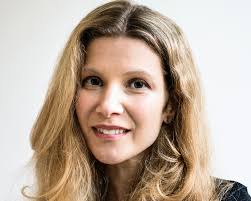
Writer/Family Survivor Tara Westover 
Truth, in this memoir, is definitely stranger than fiction. If this had been written as a novel, you might accuse the author of vast exaggeration. Sometimes, totally beyond belief. And yet, true.
Poignant, fascinating, shocking, and sometimes overwrought, for good reason, this is a story of a young Mormon girl’s coming of age. Not what you expect – oh yes, there is the revisionist ideology, the isolation, the close-knit family of many children. And yes, we see the powerful grip of the patriarchal culture.
However this patriarchy also suffers from the father’s deep psychological disturbance, likely bi-polar disorder, which has been passed on to at least one of the sons, and also suffers from profoundly powerless women, even those who wish to rise above who are inevitably and frequently dragged back down. Few, like Westover, are driven sufficiently to rise again.
However she also appreciates the blessings of rural Idaho. There’s a sense of sovereignty that comes from life on a mountain, a perception of privacy and isolation, even of dominion. In that vast space you can sail unaccompanied for hours, afloat on pine and brush and rock. It’s a tranquility of sheer immensity; it calms with its very magnitude, which renders the merely human of no consequence.
The family is so off the grid, so paranoid about medicine or institutions of all types, and so removed from community life other than a few co-workers in the family junkyard business, no one seems to care about the seven children, even when horrible accidents threaten their lives. This family is more concerned about preparing for the coming apocalypse and Tara’s mom, a self-taught mid-wife and herbalist, is focuses on canning food and ultimately protecting their hard-won wealth.
…my father had taught me that there are not two reasonable opinions to be had on any subject: there is Truth and there are Lies.
Although taught to read only by the bible, the elder brother finds his way to college, inspiring sister Tara to do the same, but she has to teach herself enough math, writing and basic grammar, and science, to take the ACT, twice, before she is accepted to Brigham Young University. From here, she is blessed with interventions and mentors who help her learn and grow and eventually land at Cambridge University and subsequently earn a PhD in history at Harvard. To do all this, she must detach from her family, the hardest lesson of all.
For as long as I could remember, I’d known that the members of my own family were the only true Mormons I had ever known, and yet for some reason, here at this university, in this chapel, for the first time I felt the immensity of the gap. I understood now: I could stand with my family, or with the gentiles, on the one side or the other, but there was no foothold in between.
You will find yourself cheering for Tara Westover, also cringing at many of her experiences, and reminded once again of the sheer power of knowledge. And storytelling. 

15 September 2018

Orange is not the new black, it's just black.

THE MARS ROOM

Author Rachel Kushner

Rachel Kushner is one of those writers who grab you at once or confound you. Or both. In this, her fourth novel, she grabs you by the shoulders, and then by the throat, and holds you despite, or because of, the subject matter: women in prison.

The novel deals largely with how they got there and how they survive, told in short takes between past and present. Kushner does not gloss over a thing. I suspect the attention to detail is as scrupulous and intense a portrait of prison life as written by an outsider. And, beyond all that, page-turner fiction.

We meet the narrator, Romy, on the overnight journey to prison. She has been sentenced to long sequential terms for the murder of her stalker. She cannot see beyond the end of the tunnel.

They were moving us at that hour for a reason, for many reasons. If they could have shot us to the prison in a capsule, they would have. Anything to shield the regular people from having to look at us…

The title, by the way, refers to a seedy strip club in San Francisco where Romy gave lap dances and where she rose above her coworkers, until she got into trouble.

If you’d showered you had a competitive edge at the Mars Room. If your tattoos weren’t misspelled you were hot property. If you weren’t five or six months pregnant, you were the it-girl in the club that night.

Her descriptions of the city by the bay are elegant and detailed, and a harsh contrast to its currently high-tech persona. She has had to leave her son behind with her mother, a ne’er-do-well herself with whom Romy has had a tumultuous relationship, and the shadows of the mother-daughter and the mother-son bond hovers over the story.

Kushner doesn’t ask you to feel sorry for Romy or any of the other memorable characters. Nor does she expect you to them. This is not a victim narrative. She merely tells their stories. You will alternately shield your eyes or, yes, cry for them. More often you may marvel at the atrocities that result from the inequities that pervade American culture, on display and intricately woven through the lives of these prisoners. And their captors.

My only critique is that Romy’s remarkable perception and insight seems the voice of a well-educated erudite person, and does not fit this character. Still, you put that out of your mind in favor of the narrative and the wisdom.

Did you ever notice that women can seem common while men never do? You won’t ever hear anyone describe a man’s appearance as common. The common man means the average man, a typical man, a decent hardworking person of modest dreams and resources. A woman who looks cheap doesn’t have to be respected, and so she has a cheap value, a certain cheap value.

This is prison, beyond cliché or reality television. About inmates, and also the bystanders, the opportunists, in and out of prison, and those who might offer redemption. Like a Russian novel with all its drama and passions. A very good read.


21 August 2018

Warlight by Michael Ondaatje


Everything we read about war is about the war – strategy, maneuvers, the drama and death. We too rarely read about, or watch on film, the immediate aftermath of war in a country, like England, ravaged for years. The slow return to past lives. The reparation – financial, personal, emotional. Or, an underground force still at war to tie up loose ends and ensure its end. It’s a fascinating time, brought to life by the great Ondaatje. A novel as intimate as memoir, and, to my mind, his best yet. 
Ondaatje won the 50 year Booker Award this year
for The English Patient, worth rereading.
When you attempt a memoir, I am told, you need to be in an orphan state. So what is missing in you and the things you have grown cautious and hesitant about, will come almost casually toward you. ‘A memoir is a lost inheritance,’ you realize, so that during this time, you must learn how and where to look. In the resulting self-portrait everything will rhyme, because everything has been reflected. If a gesture was flung away in the past, you now see it in the possession of another. So I believed something in my mother must rhyme in me. She in her small hall of mirrors and I in mine. 
In this, his eighth work of fiction, Ondaatje sets his sights on this transitional period, through the eyes of a young man employed by the government who finally uncovers his mother’s role in the war, and learns more about the people she placed he and his sister with to keep them safe.
However, as we know, and are reminded of late, children removed from their mothers are inexorably changed, in their view of the world and of themselves. This narrator, introduced as a school boy, evolves into an astute observer, a loner tethered to the past, while his sister becomes unforgiving and distrusting. Around them, a charismatic cast of endearing characters with their own secrets, who protect them and serve as surrogate family.
A lot happens, much is revealed, but slowly, quietly, in exquisite prose. Take your time.
Warlight is rendered in images. No trappings of war, only suggestions of its existence on the periphery. Nathaniel tells the tale, and also manages to convince us so completely of his revelations over time, he is able to describe events in places he couldn’t have been.
He learns his mother was a notorious spy, integral to the war effort in western Europe. So valuable, that long after the war, the extremist opposition searches for her to exact vengeance. She is never as safe as her children, who have been left with seemingly unsavory neighbors and their eccentric circle of acquaintances. The mother called her children by pet names, so the children give their caretakers odd names like The Moth, another The Darter. There is a story embedded in every name, every move they make – love stories and stories of profound friendship, also disappointment.
We order our live with barely held stories. As if we have been lost in a confusing landscape, gathering what was invisible and unspoken – Rachel, the Wren, and I, and Stitch, sewing it all together in order to survive, incomplete, ignored like the sea pea on those mined beaches during the war.

Warlight is a stunning work of fiction, recently released in hardcover or for your favorite e-reader.  

26 May 2018

The Symmetry in Asymmetry


Just months before the great writer Philip Roth passed away, a young woman penned a fascinating first novel that featured an elder writer with a surprising and definite resemblance to Roth. Turns out, he was the model for the character and he did have an affair, years ago, with the much younger woman, as depicted in the novel. As if, since Roth stopped publishing five years ago, he had to be present in fiction in another way and it works. In a recent interview, Roth said, "she got me." And what a wonderful me he was, in this novel as in life. 
Agent-turned novelist Lisa Halliday
            In the first part of three-part novel ASYMMETRY, author Lisa Halliday describes the tale of a junior editor having an affair with the revered older east coast writer, and takes place in Manhattan and Long Island, Roth's habitats, at the onset of the first Iraq war. The anxiety of the twin towers hovers over the city.
            It was cool for June; a steam rose from the water as though a river of magma flowed only a fathom below. Rustling trees cast trembling shadows on the basin, whose layers had chipped away over the years to leave swirls of old grays, greens, and aquamarines, like an antique sea chart. Beneath the surface, Alice’s hands, still coming together and swiveling apart, began to look less like instruments of propulsion than like confused magnets, or hands trying to find their way out of a dark room. But still, she swam.
           The unlikely affair between the older Jewish westside writer,  and the young quirky Irish east sider is surprisingly and delightfully funny in parts, as I'm told Roth was. Despite the sensuality, and the May-December romance, there is something decidedly sweet between them, as if a last glimpse of innocence in a world gone crazy. 
           
The great Philip Roth
The affair plays out predictably, and in Part three, the novel returns to the writer in later years in a stunning fictional interview in which he is asked to define the decades of his life through music. Roth fans know he is nearly as devoted to classical music as his writing, and the interview seems spot on. One of the characters in Part two is an exceptional pianist, one of the few slim threads of connection between parts. Asymmetry not disconnection.
            Our mother’s tendency to mythologize our childhoods would have you believe that Sami, who had never touched a musical instrument before, sat down at that piano for the first time and was rolling out bagatelles by sundown. I don’t think it was quite like this. A more accurate version surely begins with a fact that has long confounded my parents, and me to a degree as well, and that is that my brother did not like living in America. Almost from the beginning he complained of missing his Baghdadi friends and pointedly lagged behind in school, although he was no less clever than his classmates and had spoken English as well as Arabic since he was three.
            The filling in this novelistic sandwich is an entirely new set of characters - hyphenated Americans and Brits and Muslims – in the nearly McCarthy-esque days during the gulf war as Saddam Hussein is overthrown. The voice is completely different, the story line geo-political, and only a subtle hint in Part one [which I nearly missed] suggests the young woman’s interest in this culture and in writing her own novel. 
            The most profound asymmetry is in the relationships, between cultures, religions and educational status and, in some ways, also reflects the assimilation of the Jewish writer into the mainstream, in contrast to the perpetual turmoil in the middle east.
            Or not. This novel is as much about interpretation and the perception we bring to the reading. The middle part may be jarring, and seems so far from the story line it’s hard to make sense of it, at first, but take your time with it. I prefer only to review books I recommend, and this one gave me pause, but if you’re interested in post-modern literature with superlative characterization and excellent writing, despite its asymmetrical nature, or perhaps because of it, there is much to commend the writing and the pleasure of being in Roth's presence, as close as we can get now other than reading his own words, which I intend to continue to do often. 

05 May 2018

The Search for Identity

David Plante

So much has been written, and said, of late, about the search for cultural identity. And, right now, the preponderance of refugees from Africa and the Middle East attests to the constancy of human migration and to our biblical propensity to be tribal. 

I’ve just read two slim compelling novels featuring female protagonists approaching the quandary of otherness on totally different paths.  

David Plante, an accomplished British-American writer with a French-Canadian family tree, is not well known but prolific in both fiction and biography. I heartily recommend THE FAMILY, his best-known work and a National Book Award finalist.

Now he presents AMERICAN STRANGER [published in January by HarperCollins] but this stranger is not new to our shores. Nancy grew up in an affluent Jewish household in Manhattan but knows little of her parents’ German history, other than they escaped during WWII. They never speak of it, she never asks, and this disconnect to parents is also central to the story. As she comes of age, aimless and enlightened, she seeks herself in relationships with three different men. [Think searching for love in all the wrong places.} The most elusive of the three is an equally troubled young man searching for himself in spirituality and nonconformity. His searching is particularly moving to Nancy, and his memory haunts her. Plante reminds us we are grounded not only in our roots, but in the worlds we create for ourselves. While there are a few plot moments I found implausible, it’s a beautifully written work of fiction with a unique set of characters.

“Anyway. Yvon knew he couldn’t blame Ma for what she was, because she couldn’t help herself, she didn’t have the will. You see, Ma was, well, a kind of innocent, it was beyond her all that made her helpless, and, I’ll tell you, I loved her for her helplessness. And, here’s something else I’ll tell you, I loved my brother Yvon for his helplessness, that made him, too, a kind of innocent. He tried and he tried, but, after all, Yvon didn’t have much will. And those are the innocent people.”

Yuri Herrera
Pair this with SIGNS PRECEDING THE END OF THE WORLD by Yuri Herrera, who some call Mexico’s greatest novelist. [I might argue on behalf of Carlos Fuentes, although I am so pleased to discover Herrera.] Published in 2009 in paperback from the British publisher, Other Stories, and translated by Lisa Dillman, the novel [more a novella] constructs the journey of Makina, a Mexican girl in search of her brother who previously crossed the border to America. 

A proud, feisty character, Makina makes the crossing under the auspices of a seemingly benign coyote, who uses her as a messenger. She carries one unknown messenger to a stranger, and a message from her parents for her brother. Once her first mission is accomplished, she finds herself in the labyrinth that is immigrant existence in border communities and her brother seems to have vanished without a trace. Undaunted, she sets out to deliver the message.

There are homegrown and they are anglo and both things with rabid intensity: with restrained fervor they can be the meekest and at the same time the most querulous of citizens, albeit grumbling under their breath. Their gestures and tastes reveal both ancient memory and the wonderment of a new people. And then they speak. They speak an intermediary tongue that Makina instantly warms to because it’s like her: malleable, erasable, permeable; a hinge pivoting between two like but distant souls, and then two more, and then two more ,never exactly the same ones; something that serves as a link.

Both books will remind you there are no others, only disparate worlds. Happy reading. 

10 April 2018

Short Takes: One Page per Day

Eduardo Galeano 1940 - 2015
Eduardo Galeano is one of Latin America's many distinguished writers. Sadly, too few are translated into English. Thankfully, I recently discover his last gem, published in 2017, a collection of short takes with his classic voice urging advocacy for the environment and indigenous people. Read just one per day, as each small take speaks volumes and will ground your presence.

HUNTER OF STORIES. 250 pages. One small story or contemplation per page. Most have to do with the destruction of the natural world, one of his constant themes., and with indigenous cultures and their prescience, and foreboding, for the future.

Some as small as one line. All pack an amazing punch. Consider "We Were Walking Forests."

Every day the world loses a forest, murdered while only a fe centuries old and still growing. Barren deserts and uniform plantations spread far and wide., burying the world of green. Only a few people have been wise enough to keep up the language of plants that allows them to communicate with the fortress of the oak and the melancholies of the willows.

And "Let's Go Out."
At the end of the nineteenth century, many residents of Montevideo spent their Sundays on a favorite outing:an excursion to the jail and the insane asylum. Contemplating prisoners and lunatics, the visitors felt certifiably free and sane. 

Read one, takes a moment or two, and then you will find it stays with you through the day, perhaps longer, as Galeano takes us back to another time, the time we've let pass and in looking back, we might long for another time, or, perhaps, we might better consider the future.

And then I discovered SALT. Poetry by Nayyirah Waheed, who writes of more personal longings. The eons-old passions and fears fitted to modern life. Again, short takes, one per page, sometimes one line, often Zen. She posts them on Instagram as well and I never fail to stop what I'm doing to think about what she has said. Might be a bit too existential for the masses,, but she has such a lovely way with words. Always in lower case, beyond an homage to ee Cummings, perhaps she means to say, don't take yourself quite so seriously, we are all one.

Again, one per day. Morning is a good time, to leave time to consider her words. Better than meds or vitamins. And she often writes of the natural world. Galeano would approve.

sometimes the night wakes in the
middle of me.
and i can do nothing
but
become the moon.

if
the ocean 
can calm itself
so can you.
we
are both
salt water
mixed
with
air.

SALT is only available at Amazon.com.

Happy reading.